
I am saddened to see the devastation and loss of life occurring just now in Kerala.
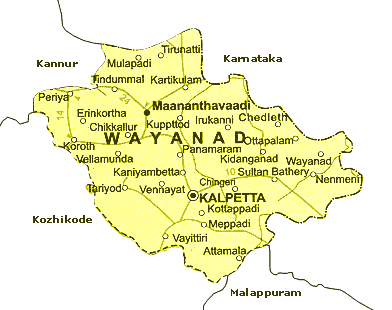
Kerala’s Wayanad district has been devastated by a landslide triggered by heavy flooding, resulting in 296 deaths and displacing over 8,000 people. The disaster, exacerbated by continual rain hampering rescue efforts, is part of a worrying trend of extreme weather events in Kerala over the past decade.
I saw first-hand the devastation caused by flooding when I visited back in 2018.
“Climate change is drastically altering rainfall patterns”
Climate experts attribute this latest catastrophe to global warming and changing rainfall patterns. With experts highlighting “Climate change is drastically altering rainfall patterns in Wayanad. What was once a cool, humid environment with consistent rainfall is now marked by drier, hotter summers and intense monsoon downpours, increasing the risk of landslides.”
Kerala’s unique geography, coupled with deforestation and unplanned development, heightens its vulnerability to such events. The Western Ghats, an ecologically fragile region, has experienced significant forest cover loss, further increasing landslide risks.
To mitigate future disasters, experts recommend implementing early warning systems, strengthening infrastructure, and promoting sustainable land management practices. These measures are crucial as climate change continues to intensify extreme weather events across India.
It is for reasons like this that during my time in Parliament I advocated for stronger global climate policies and supported international agreements on emissions reductions.
International aid budgets need a greater focus on supporting projects aimed at reforestation and sustainable land management, and to fund climate adaptation initiatives in vulnerable regions.

 Aye Matters