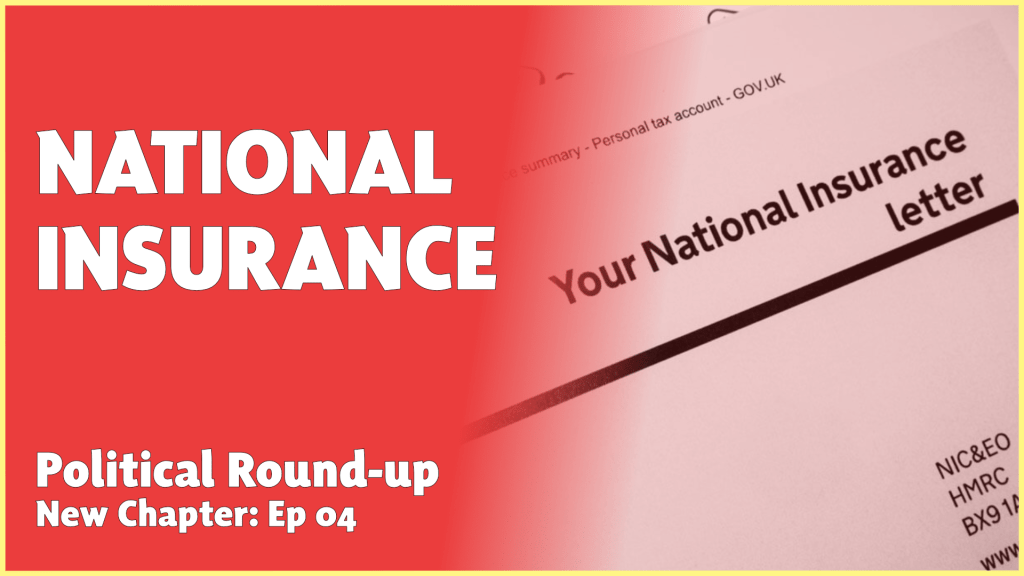
The recent changes to Employers National Insurance Contributions (NICs) are more than just a bureaucratic adjustment. It has added to the pressures Scotland faces adding well over £700 million to the cost of delivering public services.
Despite this, the UK Government seems to be saying it will only reimburse less than half of that cost. The Chancellor still has an opportunity to do the right thing. Services in Scotland should not have to suffer.
The Scale of the Challenge
At its core, the issue is stark: the UK government has increased Employers National Insurance Contributions from 13.8% to 15%. While this might seem like a small percentage, the ripple effects are profound and far-reaching.
Take Falkirk Council as a microcosm of the broader challenge. The council leader warns of an additional £8 million burden – a figure that is being replicated in local governments across Scotland. This is not just a number on a spreadsheet; it represents real-world consequences for public services.
Economic Impact Across Sectors
The Office for Budget Responsibility (OBR) provides a chilling assessment. In evidence to the Scottish Parliament, Richard Hughes, the OBR Chair, explained that “much of the slowdown in real earnings growth and household disposable income over the next two years is driven by the fact that the bulk of the employer national insurance rises will ultimately fall on the real wages of employees.”
Different sectors are feeling the impact in dramatically different ways. One Hair and Beauty sector representative highlighted that their 60% wage costs mean they are hit five times harder than traditional retail businesses.
Sectoral Breakdown
The human cost is becoming increasingly apparent:
- Charities: Over 7,000 organizations are at risk
- Marie Curie: Facing an additional £2.92 million annually
- Scottish SPCA: Losing £400,000 per year
- Universities: Confronting a £45 million bill
- Healthcare: General Practitioners potentially reducing appointments
Political Voices Raise Concerns
Political representatives across Scotland are sounding the alarm. John Swinney MSP warned that these national insurance contributions “are not going to improve the standard of living for people in the United Kingdom over a five-year period.”
At Westminster Ben Lake MP highlighted the Office for Budget Responsibility’s prediction that “76% of the total cost of the increase in employers’ national insurance will be passed through lower real wages. That not only tells you that there will be an impact on businesses, but also… will be an impact on working people.”
When delivering the Scottish Budget Proposals Shona Robieson MSP underscored the broader economic pressure, noting that “the UK government has actually added to the pressures that Scotland faces with the increase in employers’ national insurance contributions. This hike will add well over £700 million to the cost of delivering public services.”
It will come as no surprise that Starmers new Scottish Labour MPs remain silent on the issue.

The Devolution Dilemma
The Barnett Formula – often presented as a solution – is revealed to be inadequate. Ben Lake MP’s critique cut to the heart of the matter when he stated, “I am not going to thank for the larger settlement, because that is only a function of the fact of spending decisions made for the purposes and to address the needs of public services in England.”
Crucially, even with these adjustments, Scotland continues to receive less funding than it did in 2020. This is not a solution, but a continued erosion of Scotland’s financial resources.
Immediate Consequences
The impact is already visible:
- Care homes warn of scaled-down services
- Universities are beginning redundancy processes
- Charities are facing potential service reductions
- Local councils are struggling to maintain current service levels
Looking Forward
This is more than an economic challenge. It’s a fundamental question about the kind of society we want to create. Can our essential services – the backbone of our communities – survive these increased contributions?
The answer, for now, remains worryingly uncertain. What is clear is that the current system is not working. The national insurance contribution increase is not just a tax adjustment; it’s a potential turning point for Scotland’s economic and social landscape.
As the debate continues, one thing becomes increasingly apparent: the status quo is no longer tenable. Whether through radical reform or a fundamental reimagining of Scotland’s economic governance, change is not just necessary – it’s inevitable.
The only credible alternative to having little control over the political and economic decisions made for for us by another nation is to make them for ourselves with independence.
The Independence Perspective
For many, these challenges crystallize the argument for Scottish independence. I have long belived that this is precisely why Scotland needs to control its own economic destiny. Independence is a vital necessity for Scotland because decisions taken at Westminster have made life more difficult for communities and businesses across the country.
The vision is clear: taking decisions about Scotland in Scotland offers an opportunity to build a nation where prosperity and fairness go hand-in-hand.

 Aye Matters